Estate Drip Coffee- Ethiopian Geisha Village Natural / Bench Maji Fair Trade Station Geisha G1 Washed|Light【Justin Coffee】Light(10g per bag) Oxygen-Free Packaging
商品介紹

➤Freshly Roasted Coffee Bean Specialty Store
➤CQI Certified Q Grader Quality Assurance
➤Million-Level Coffee Bean Sorting Machine Eliminates Defective Beans
➤Deoxygenated Preservation Process for Drip Coffee

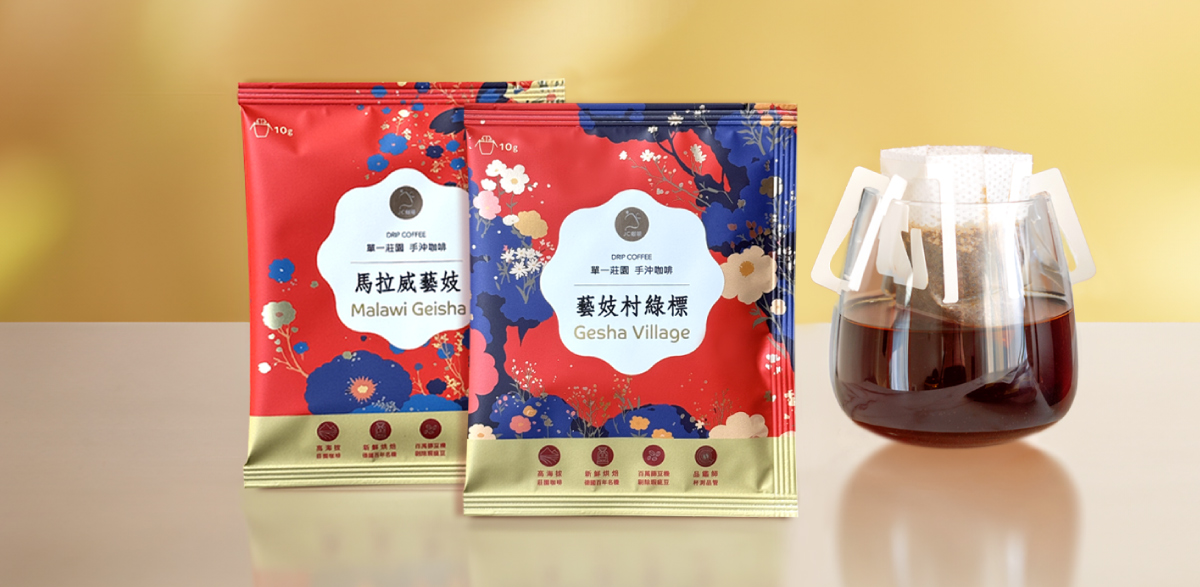
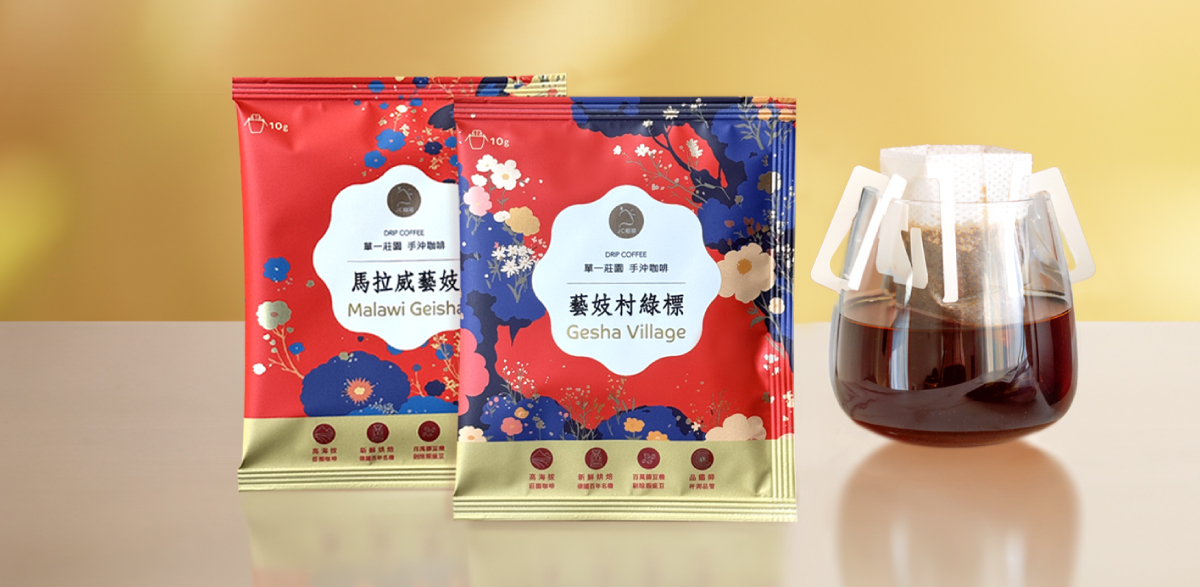
The Elegant Arrival of Geisha Drip Coffee!
Justin Coffee's festive limited edition Geisha drip coffee features the richly aromatic and delicately sweet Gesha Village coffee, as well as the Malawi Geisha with its elegant floral notes and hints of licorice, providing a perfect start to the New Year.
These two Geisha drip coffees come in sophisticated and exquisite packaging, carefully selected and brimming with blessings. This year, present your friends and family with this thoughtfully crafted specialty coffee, offering them a warm and delightful aromatic experience.
Information on the two types of drip coffee is as follows:
🔸 Ethiopia Gesha Village Bangi Gori Geisha Washed SINGLE-TERROIR
- Origin: Ethiopia
- Estate-grown coffee: Ethiopia Gesha Village Bangi Green Label
- Processing Method: Washed
- Variety: 100% Arabica Gori Geisha
- Flavor Notes: Citrus, Ginger Lily, Floral & Fruity, Juicy, Brown Sugar, Soft, Velvety Acidity, Lingering Honey Sweetnes
- Roast Level: Light roast
- Packaging: Drip Bag Coffee 10g per pack
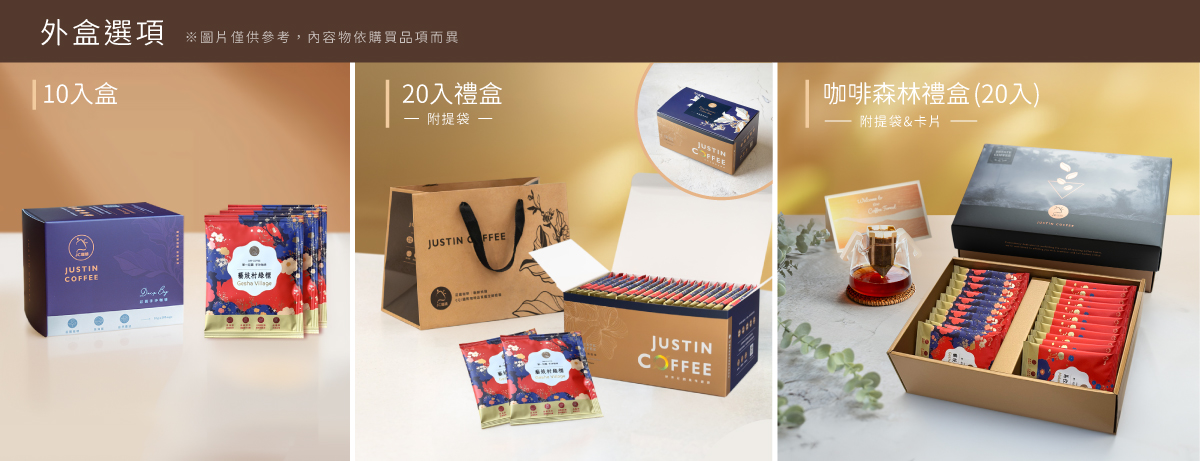
- Box Options (Styles & Sizes — see box options image below):
- No Outer Box
- 10 Packs/Box (no carry bag, optional purchase available)
- 20 Packs/Box (includes a carry bag)
- Elevation: 1966-2019m
- Shelf Life: 1 year (packaged with oxygen removal technology; once opened, it tastes as fresh as freshly ground)
-----
🔸 Single Estate Drip Coffee- Ethiopia Bench Maji Fair Trade Station Geisha G1 Washed
- Coffee Bean Origin: Malawi
- Estate-grown coffee: Malawi Misuku
- Processing Method: Washed
- Variety: 100% Arabica Geisha
- Flavor: Delicate floral aroma, orange, lemon peel, honey, licorice, spices, with a lemon peel aftertaste
- Roast Level: Light Roast
- Packaging Method:Drip Coffee, 10g per pack
- Outer Box Options (Style & Dimensions, see images below):
- No Outer Box
- 10 Packs per Box (No carrying bag; can be purchased separately)
- 20 Packs per Box (Includes carrying bag)
- Elevation: 2360m
- Shelf Life: 1 year
(packaged with oxygen removal technology; once opened, it tastes as fresh as freshly ground)
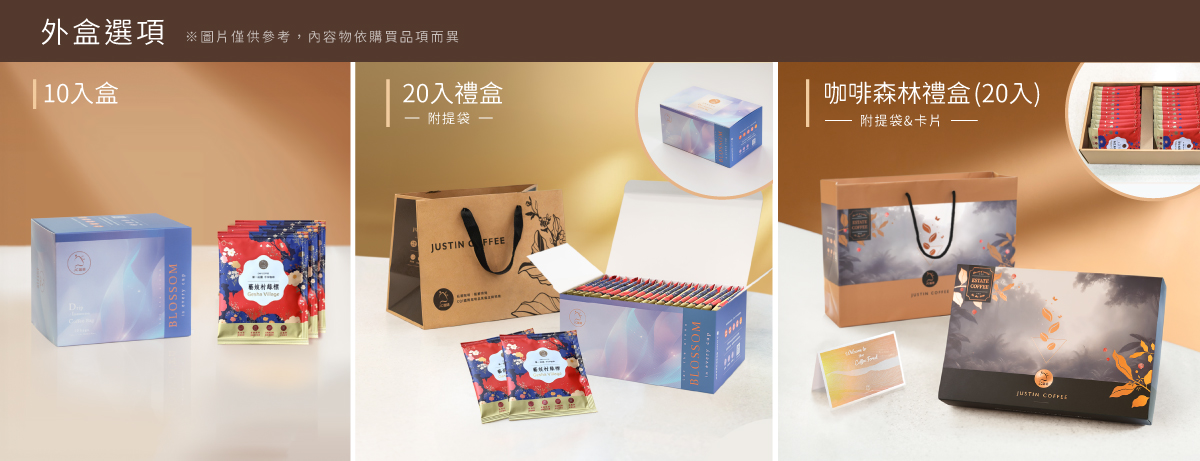
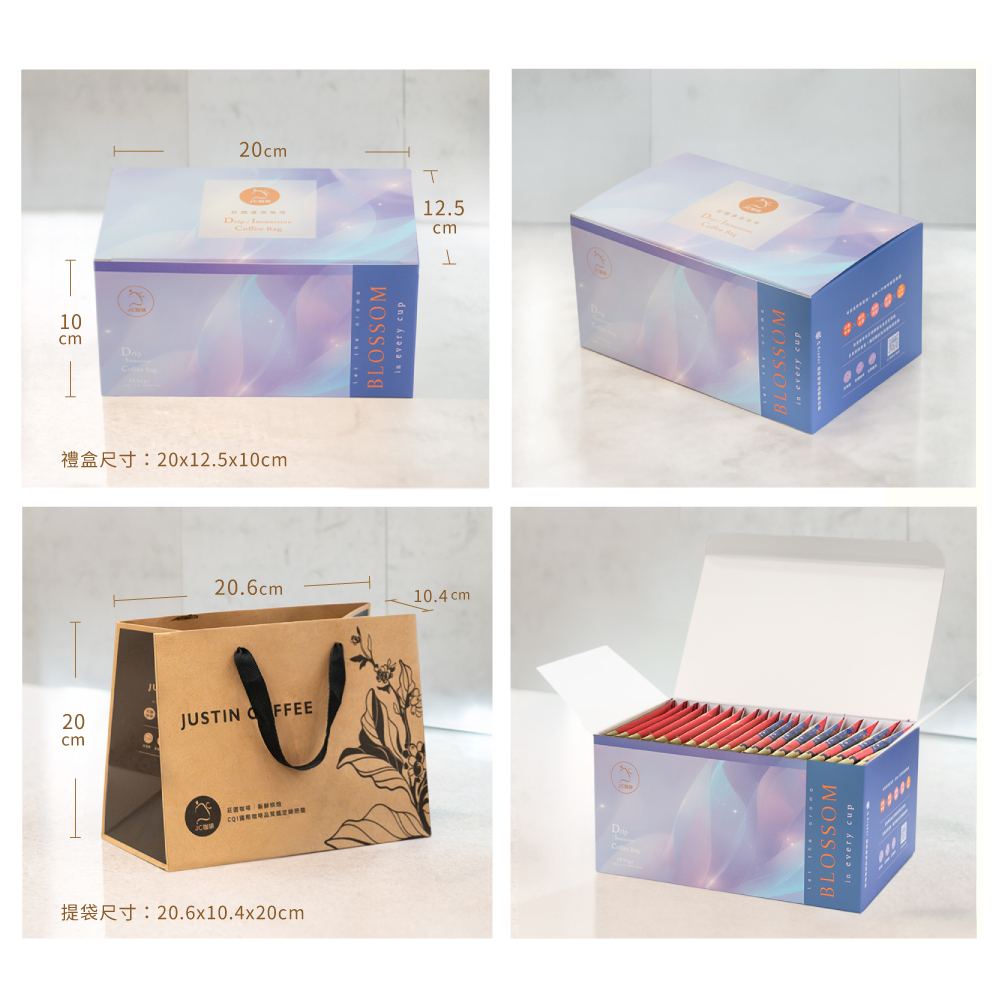
Coffee Forest Gift Box & 20-Pack Gift Box include a gift bag (For the 10-pack box, a gift bag is available for additional purchase).
20-Pack Gift Box- Appearance & Dimensions
Coffee Forest Box- Appearance & Dimensions
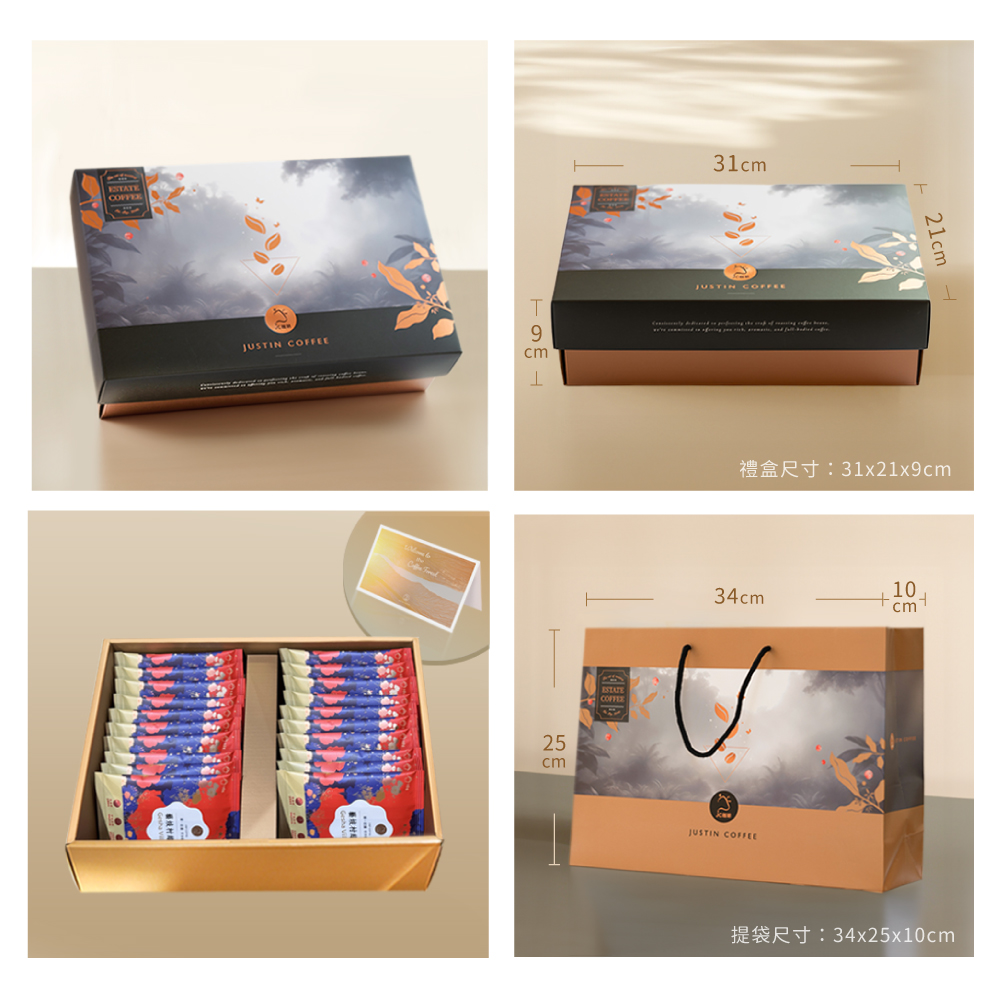
Coffee Forest Gift Box & 20-Pack Gift Box include a gift bag (For the 10-pack box, a gift bag is available for additional purchase).
※ Order limit: A maximum of 5 boxes can be picked up at convenience stores. Additional items cannot be included in the same order.


Coffee Flavor
The flavors of coffee are derived from the breakdown of various nutrients in the green coffee beans during roasting. Heat causes these compounds to degrade into a variety of aromatic molecular structures, resulting in a wide spectrum of flavors. High-quality coffee beans naturally possess a rich aroma that evolves at different temperatures—high, medium, and low—offering a delightful and nuanced experience worth savoring.
Ethiopia Gesha Village Bangi Gori Gesha Washed SINGLE-TERROIR
Citrus, Ginger Lily, Floral & Fruity, Juicy, Brown Sugar, Soft, Velvety Acidity, Lingering Honey Sweetnes
Single Estate Drip Coffee- Ethiopia Bench Maji Fair Trade Station Geisha G1 Washed
Delicate floral aroma, orange, lemon peel, honey, licorice, spices, with a lemon peel aftertaste

Ethiopia Gesha Village
At Gesha Village, every step of cultivation and processing is dedicated to uncompromising quality. Each batch is marked by rich floral and fruity aromas, characteristic coffee flavor elements, and is carefully graded. Through a rigorous cupping process, each batch is meticulously selected, evaluated using the Specialty Coffee Association (SCA) protocols, and classified according to Gesha Village’s grading system. These batches are then offered to global buyers, ranging from extremely rare treasures to fully traceable single origins. The grading system is as follows:
Gold Label: RARITIES
The Gold Label represents rare treasures, making up only 10% of Gesha Village's total estate production. Extremely scarce, these coffees feature top-tier flavor characteristics, pronounced and lasting aromas, and a refined texture. This grade is where auction lots are selected and is often the first choice of international baristas for competitions.
Red Label: GROWERS RESERVE
The Red Label batch accounts for only 15% of the estate's production. It showcases exceptional flavor and quality, consistently scoring above 88 points on the SCA cupping scale.
Green Label: SINGLE TERROIR
The Green Label batches originate from a single region within the Gori Geisha Village. Each batch has complete traceability, including details such as the farm block name, coffee variety, and processing date.
Gesha Village Coffee Estate in Ethiopia cultivates coffee trees under the shade of the original forest canopy, employing natural shading and intercropping methods to achieve environmental sustainability. The estate aims to be Ethiopia's finest and most environmentally conscious coffee farm, with an uncompromising commitment to quality in every step of cultivation and processing, and a strong dedication to its employees and customers. Gesha Village seeks to connect the world to Ethiopia and reveal all of its beauty within a perfect cup of coffee.
-------------
(Fair Trade Station)
Originating from Bench Maji, Ethiopia, this remote coffee-growing region is so isolated that it is difficult to pinpoint on most maps. Its pristine natural environment, combined with a unique and remarkably stable microclimate, provides the ideal conditions for producing Geisha coffee with exceptional clarity and a highly distinctive flavor profile.
Local producers firmly believe that only through honest, dedicated cultivation can they earn the fairest and most meaningful rewards for their work.
Beyond its extraordinary natural setting, the washing station is situated at a high elevation, where significant day-to-night temperature fluctuations play a vital role in developing the coffee's remarkable sweetness, complexity, and refined cup character.

(Geisha/Gesha)
Geisha coffee, once named one of the "World's Top 10 Most Expensive Coffees" by Forbes, is a legendary name in the world of specialty coffee. However, there is significant confusion surrounding the Geisha variety, as several genetically distinct plant types are referred to as Geisha, many of which share a similar geographic origin in Ethiopia. Recent genetic diversity analysis conducted by the World Coffee Research confirms that the T2722 variety cultivated in Panama is both unique and consistent. When well-managed in high-altitude regions, this variety is strongly correlated with exceptional cupping quality and is renowned for its delicate floral aroma, jasmine notes, and peach-like fragrance.
Regarding the spelling, both "Geisha" and "Gesha" are used interchangeably. The variation arises from transliteration differences, as there is no fixed translation from Ethiopian dialects to English. The coffee was initially recorded as "Geisha" in planting records, and over time, this spelling became prevalent in the coffee industry. However, "Gesha" is closer to the original pronunciation in Ethiopia.
In recent years, the cultivation of the Geisha variety has spread worldwide, achieving remarkable results in various competitions. Countries in Central and South America, such as Guatemala, Costa Rica, El Salvador, Colombia, and Peru, have successfully grown this variety, often transplanting the T2722 variety from Panama. Additionally, regions in Taiwan have begun cultivating Geisha at high altitudes, where the higher elevation often enhances its enchanting flavor profile.
 (Coffee Processes)
The term "processing methods" refers to the process of transforming ripe red coffee cherries into dried green beans. Each method has its advantages and disadvantages, influenced by the natural environment and the specific needs of the coffee-producing region. As a result, different regions adopt the processing method most suited to their conditions. This batch uses the following three processing methods, described below:
【Natural Process / Sundried / Dry Processed】
Also known as the natural drying method or unwashed process, the natural process is one of the most traditional and widely used methods of coffee processing. This method does not involve the use of water. Originating in Ethiopia, coffee cherries are harvested and laid out to dry under the sun before being hulled. The seeds remain inside the fruit throughout the extended drying period, absorbing flavors from the skin, pulp, and mucilage. This process enhances the coffee's sweetness and body, often resulting in unique and distinctive aromas.
Producers spread the cherries on drying beds, which may consist of terraces or raised platforms. Over the course of 3 to 6 weeks, the cherries undergo fermentation. Producers turn the cherries regularly to ensure even drying and to prevent spoilage. During this time, the sugars in the fruit and the mucilage adhered to the seeds develop complex flavors, contributing to a sweeter profile.
Once dried, the fruit layers are mechanically removed from the seeds. Natural-processed coffee is often juicy and syrupy, with a rich flavor that makes the effort behind this method well worth it.
【Washed / Wet Processed】
Also known as the wet process, this method involves removing the skin and pulp of the coffee cherries before drying. The seeds are then fermented in water tanks to eliminate the remaining mucilage on their surface, followed by thorough washing and drying under sunlight or with mechanical dryers.
The washed process produces a cleaner and crisper flavor profile compared to the natural process. Coffees processed this way typically have lighter body, brighter acidity, and distinct fruit flavors. This method is often associated with specialty coffee due to its clarity and vibrant flavor expression.


【Manufacturer Information】
JUSTIN INTERNATIONAL FOOD ENTERPRISE CO., LTD.
Tel: +886-3-358-6611
1st Floor, No. 30, Lane 120, Daxing Road, Taoyuan District, Taoyuan City
▶This product is covered by a NT$10 million product liability insurance.
▶Food Industry Registration Number: F-165601955-00000-0
▶ Our company’s cupper is certified as a CQI International Coffee Quality Appraiser.


Recommended Products


規格說明

出貨日 & 付款說明
※ Note: A maximum of 5 boxes can be picked up at convenience stores. Additional items cannot be included in the same order.
※ For detailed shipping and payment information, invoices, overseas ordering instructions, etc., please click here to enter.

相關商品


