Estate Drip Coffee- Uganda Mount Elgon PeaBerry Washed|Light 【Justin Coffee】10g/Pack-Oxygen removal packaging
商品介紹

➤ Freshly Roasted Coffee Bean Specialty Shop
➤ Quality Assured by a Q Grader
➤ Defective Beans Removed Using a High-End Coffee Bean Sorter
➤ Oxygen-Reduced Packaging for Freshness

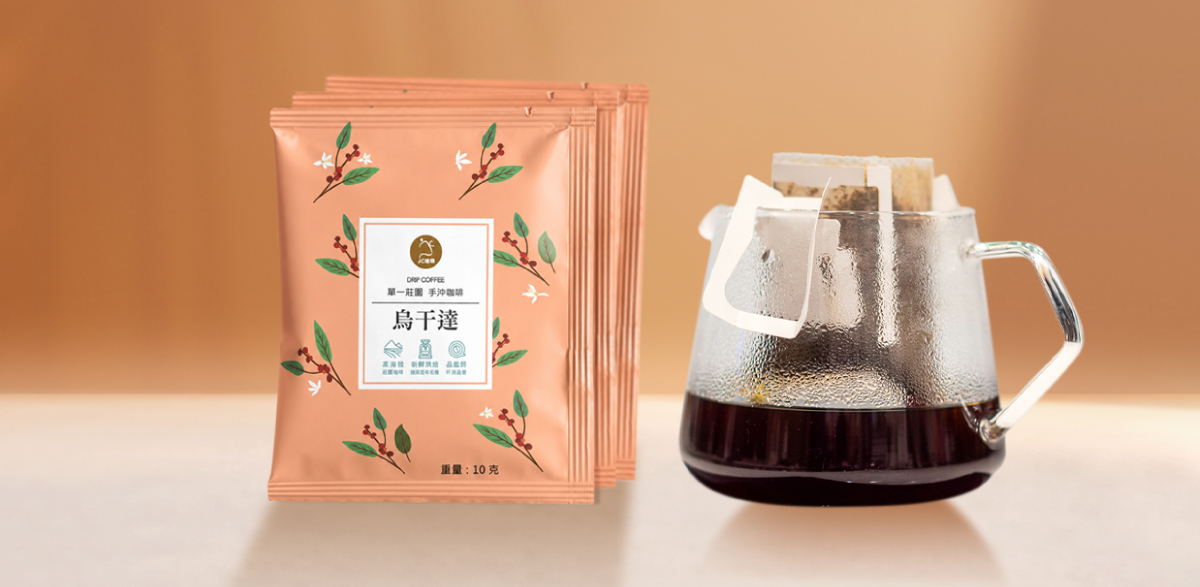
【 Product Name 】
Uganda Mount Elgon PeaBerry Washed
--------
【 Coffee Information 】
Coffee Bean Origin: Uganda
Estate / Coffee Name: Uganda Mount Elgon
Processing Method: Washed
Variety: 100% Arabica Coffee Beans – Nyasaland / SL14 / SL28
Flavor Notes: Orange, Blueberry, Blackcurrant, Hazelnut, Butter; Orange & Hazelnut finish
Roast Level: Light Roast
Packaging: Drip Coffee, 10 g per pack
Box Options (styles & sizes as shown in the box options below):
- No Box
- 10 sachets/box (Gift bag not included; available as an add-on)
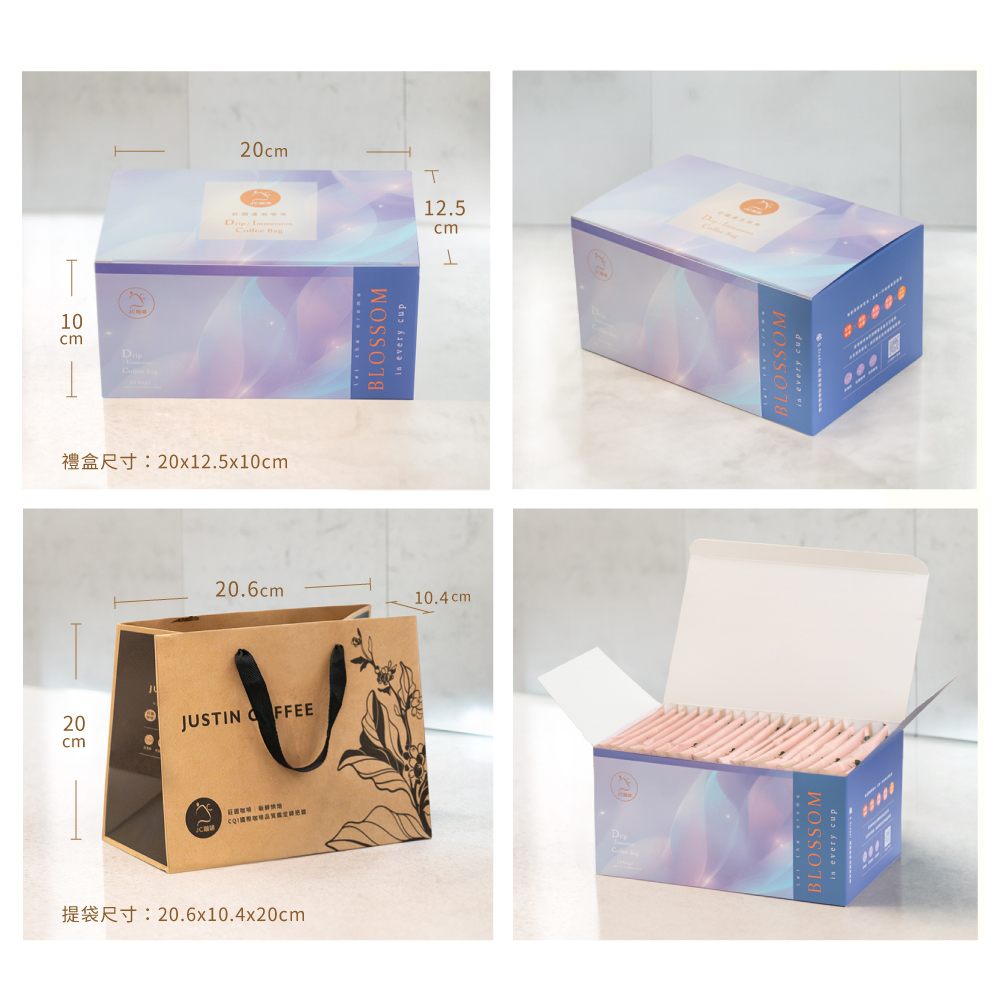
- 20 sachets/box (Gift bag included)
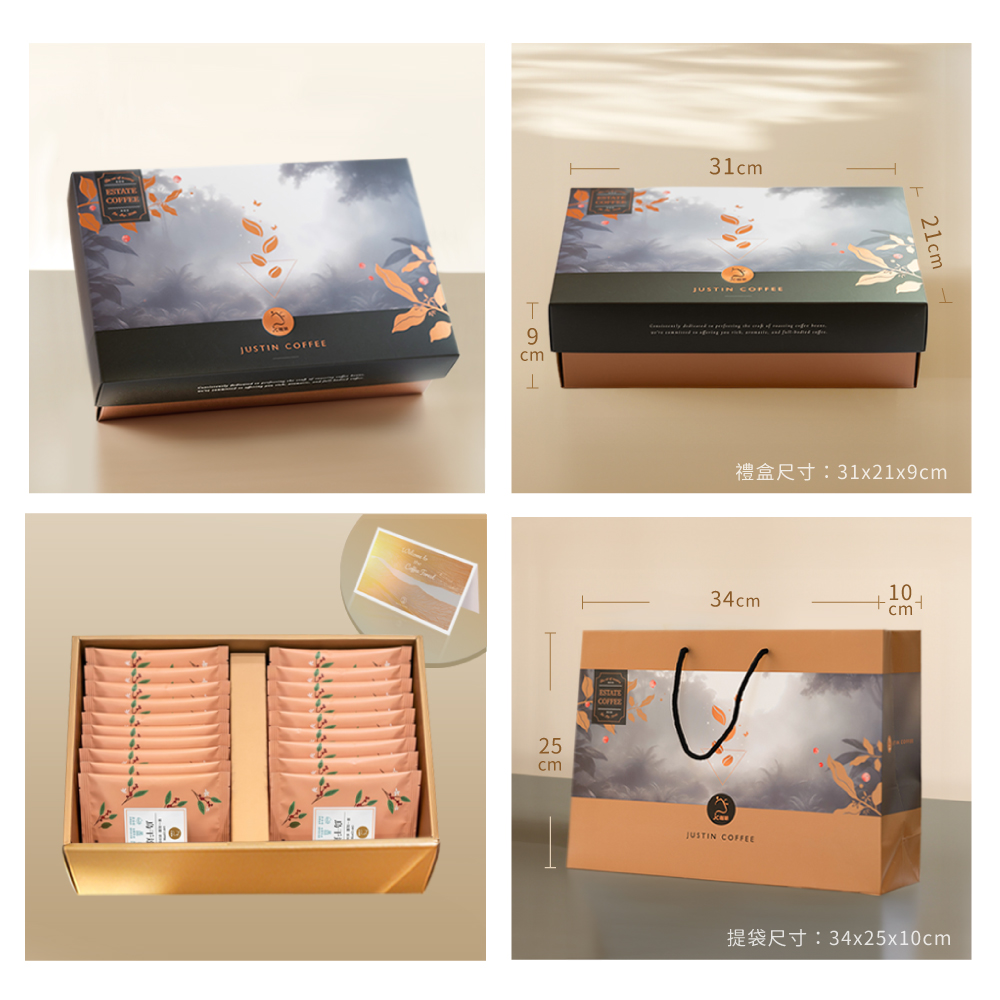
- Coffee Forest Gift Box – 20 sachets/box (Greeting card & gift bag included)
Altitude: 1600-2000m
Shelf Life: 1 year. Please refer to the package for the expiration date. (Oxygen-removed packaging.)
Nutrition Information: Nutrition labeling is not required for coffee.
Country of Origin: Taiwan (Roasted)
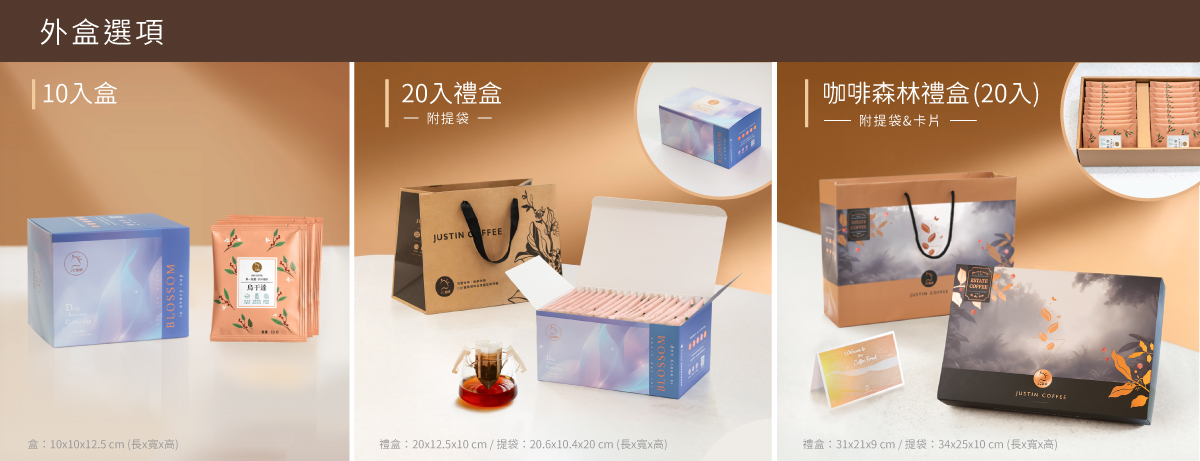
※ Coffee Forest Gift Box & 20-Piece Gift Box include a gift bag
(For the 10-piece box, a gift bag is available for ►purchase)
20-Piece Gift Box – Appearance & Dimensions

Coffee Forest Gift Box – Appearance & Dimensions

※ Order limit: A maximum of 5 boxes can be picked up at convenience stores. Additional items cannot be included in the same order. For orders of 6 boxes or more, please select home delivery.


Coffee Flavor
The flavors of coffee are derived from the breakdown of various nutrients in the green coffee beans during roasting. Heat causes these compounds to degrade into a variety of aromatic molecular structures, resulting in a wide spectrum of flavors. High-quality coffee beans naturally possess a rich aroma that evolves at different temperatures—high, medium, and low—offering a delightful and nuanced experience worth savoring.
Uganda Mount Elgon PeaBerry Washed
Orange, Blueberry, Blackcurrant, Hazelnut, Butter; Orange & Hazelnut finish

Uganda Mount Elgon Coffee Cooperative
The Uganda Mount Elgon Coffee Cooperative officially entered the region in 2017. With a focus on quality and flavor as the foundation for sustainable operations, the cooperative spent the three years prior to large-scale production working closely with local farmers to research and implement key measures for improving the quality of Ugandan coffee. The team actively sought out farmer partners who shared its commitment to quality and ethical practices, while also creating more opportunities for farmers to participate in cooperative decision-making and operations.
In recent years, the cooperative has established a stable system for centrally processing the coffee it collects and has invested in various quality-improvement infrastructure projects, including expanded processing capacity and temperature-controlled warehouses. The cooperative currently operates three processing stations on Mount Elgon, located in Sironko, Mabono, and Kajere.
Most coffee farmers in Uganda operate on a very small scale, with an average farm size of less than one hectare. As a result, cooperatives play a vital role in the local coffee industry. The cooperative recognized early on that Ugandan coffee had developed a poor reputation in international markets due to inconsistent quality, limited flavor profiles, and a lack of transparency. These challenges were closely linked to farmers being forced to sell their coffee at low prices. With limited income, farmers often struggled to properly manage Arabica coffee trees and instead planted larger quantities of Robusta, which is generally easier to cultivate.
To change this situation, the cooperative decided to invest in improving the overall structure of the coffee industry and to build a fairer and more sustainable coffee value chain for more than 1,000 member farmers. They believe that only when coffee can genuinely improve the economic well-being of farming families will farmers be willing to invest more time and effort in improving quality and shift toward cultivating Arabica varieties, which have higher economic value but require more careful cultivation and management.

Arabica Coffee Variety – Nyasaland
Nyasaland is one of the earliest Arabica coffee varieties to become established in Africa. Its origins can be traced back to the 19th century, when Typica was brought across the ocean from Jamaica and introduced to what was then known as Nyasaland (present-day Malawi). From there, it spread through the East African highlands to Mount Elgon in Uganda, where smallholder farmers carefully cultivate it through agroforestry systems on mountain slopes at elevations of 1,300–1,600 meters.
With a lineage spanning more than a century, this coffee variety carries an ancient genetic heritage. Many of the coffee trees are more than half a century old, making Nyasaland one of the few heirloom varieties that still retain traditional Arabica genetics.
Because of its relatively low yield and demanding cultivation requirements, Nyasaland has retained a quiet rarity and purity, making it a distinctive and uncommon Arabica variety.
---
Arabica Coffee Variety – SL14
SL14 is a selectively bred Arabica variety developed in the highlands of East Africa. To address the vulnerability of traditional varieties to climate change and disease, researchers used Central African Arabica as a foundation to develop a variety that combines resilience, stability, and strong cup quality. Today, SL14 has become an important variety for many smallholder farmers across African coffee-growing regions.
In the coffee fields, SL14 is known for its strong adaptability and stable yields. In the cup, it offers a pleasing sense of balance—a style that is smooth, approachable, and easy to enjoy day after day.
The charm of SL14 lies in its balance. It is neither as wild and distinctive as some heirloom varieties nor as ordinary as high-yield commercial cultivars. Instead, it strikes a comfortable middle ground—clean, consistent, and elegant, with the refreshing character unique to the highlands of East Africa.
---
Arabica Coffee Variety – SL28
SL28 and SL34 are coffee varieties developed through selective breeding from Bourbon-related lineages and are renowned for their exceptional cup quality. Both varieties are closely associated with Kenya and were developed and named by Scott Laboratories (SL) in the 1930s.
SL28 carries genetic heritage associated with Bourbon, Mocha, and Typica. It was developed with the goal of combining high cup quality with resistance to pests and diseases. Although its yield ultimately proved lower than originally expected, SL28 became highly regarded for its pronounced sweetness, excellent balance, and complex, multifaceted flavor profile, often featuring distinctive notes of citrus and Chinese preserved plum (wu mei).
Its combination of complexity, sweetness, and vibrant acidity has made SL28 one of the most celebrated Arabica varieties in East African coffee.

(Coffee Processes)
The term "processing methods" refers to the process of transforming ripe red coffee cherries into dried green beans. Each method has its advantages and disadvantages, influenced by the natural environment and the specific needs of the coffee-producing region. As a result, different regions adopt the processing method most suited to their conditions. This batch uses the following wet processed methods, described below:
【Washed / Wet Processed】
Also known as the wet process, this method involves removing the skin and pulp of the coffee cherries before drying. The seeds are then fermented in water tanks to eliminate the remaining mucilage on their surface, followed by thorough washing and drying under sunlight or with mechanical dryers.
The washed process produces a cleaner and crisper flavor profile compared to the natural process. Coffees processed this way typically have lighter body, brighter acidity, and distinct fruit flavors. This method is often associated with specialty coffee due to its clarity and vibrant flavor expression.


JUSTIN INTERNATIONAL FOOD ENTERPRISE CO., LTD.
Tel: +886-3-358-6611
1st Floor, No. 30, Lane 120, Daxing Road, Taoyuan District, Taoyuan City
▶This product is covered by a NT$10 million product liability insurance.
▶Food Industry Registration Number: F-165601955-00000-0
▶ Our company’s cupper is certified as a CQI International Coffee Quality Appraiser.


Recommended Products


規格說明

出貨日 & 付款說明

相關商品


